


Building Frames Around the Approved Structure
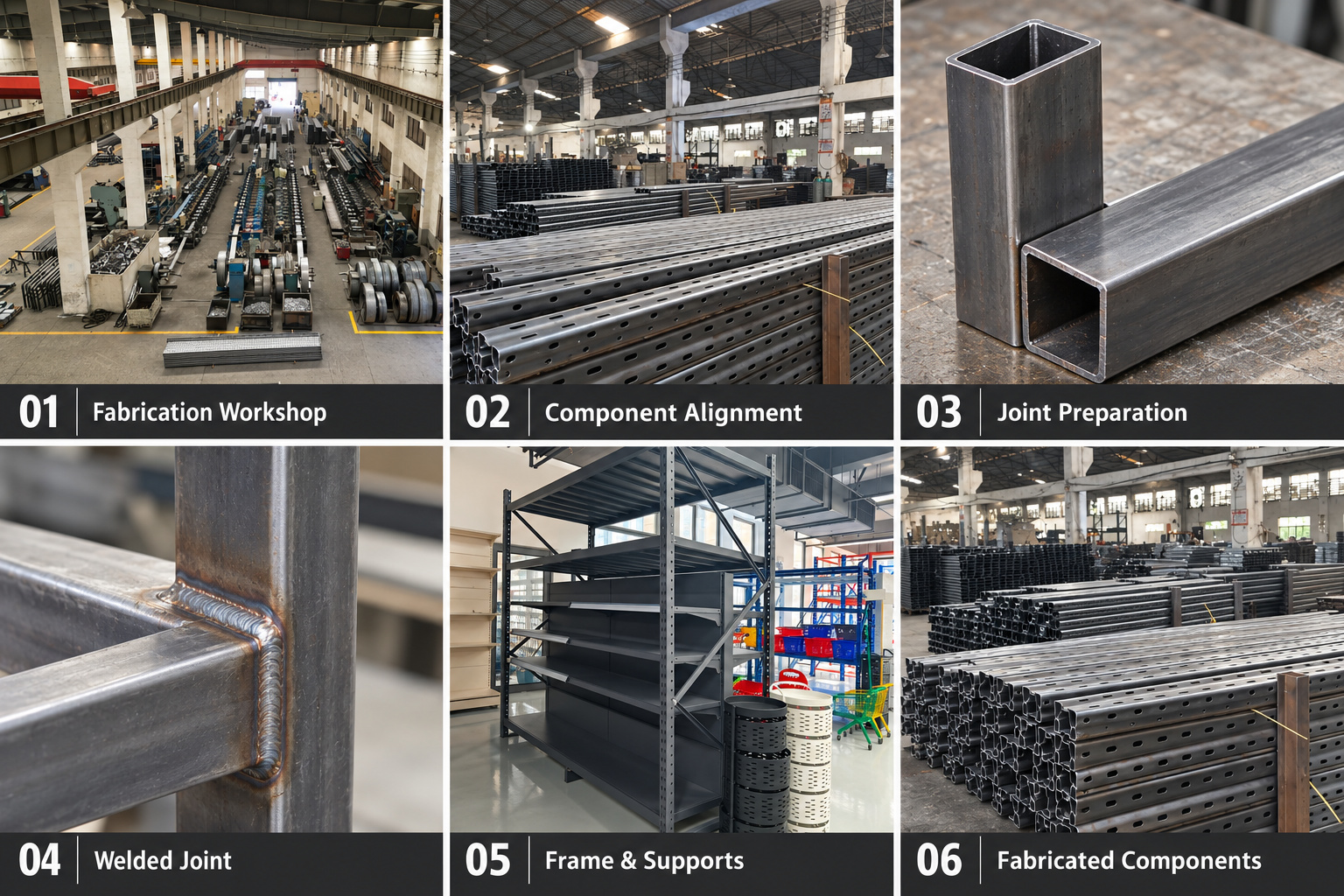
Welding and fabrication bring prepared rack components together into frames, supports and other joined assemblies. Joint placement and component alignment affect assembly fit, finished appearance and how the structure performs in its intended application.
For supermarket shelving, stainless steel kitchen racks, garment displays and shoe racks, we review which parts require welding and which remain detachable. OEM buyers, importers and distributors should confirm this arrangement before sampling because it affects production, carton dimensions and installation.
Confirming Joint Locations and Component Fit
Fabrication starts with the approved drawing and prepared parts. Tube ends, brackets and supporting members must fit together before welding. Gaps, incorrect cut lengths or misaligned holes can create problems that welding alone cannot resolve.
We review joint locations, connection surfaces and the position of adjoining components. Visible joints may need different finishing attention from concealed joints, while connections near shelves or accessories must leave sufficient assembly clearance.
The size and structure customization review helps establish these details before a frame sample is produced.
 Managing Alignment During Welding
Welding introduces heat that can affect component alignment. Frames need positioning and support appropriate to their geometry so that joined parts remain within the agreed dimensional requirements.
Checks focus on frame dimensions, squareness, alignment and the locations of mounting features. A frame that looks straight from one angle may still interfere with shelf seating or detachable connections.
Material type, thickness and joint design influence the welding approach. Stainless steel parts also require attention to handling and visible surface condition. The method and finishing requirements should be confirmed for the specific rack rather than assumed to be identical across products.
Reviewing Joints Before Surface Finishing
Welded areas are reviewed for visible gaps, cracks, spatter, sharp projections and other irregularities that could affect the agreed finish or handling. The acceptance requirements should reflect the joint’s purpose and the approved specification.
Visible surfaces may require additional cleaning or dressing before coating. Excessive grinding can alter the joint, so appearance requirements need to be balanced with the specified construction.
Our grinding and surface preparation stage addresses the transition from fabricated parts to surfaces ready for finishing. Specialist weld testing, where required, needs separate agreement.
Approving the Fabricated Sample
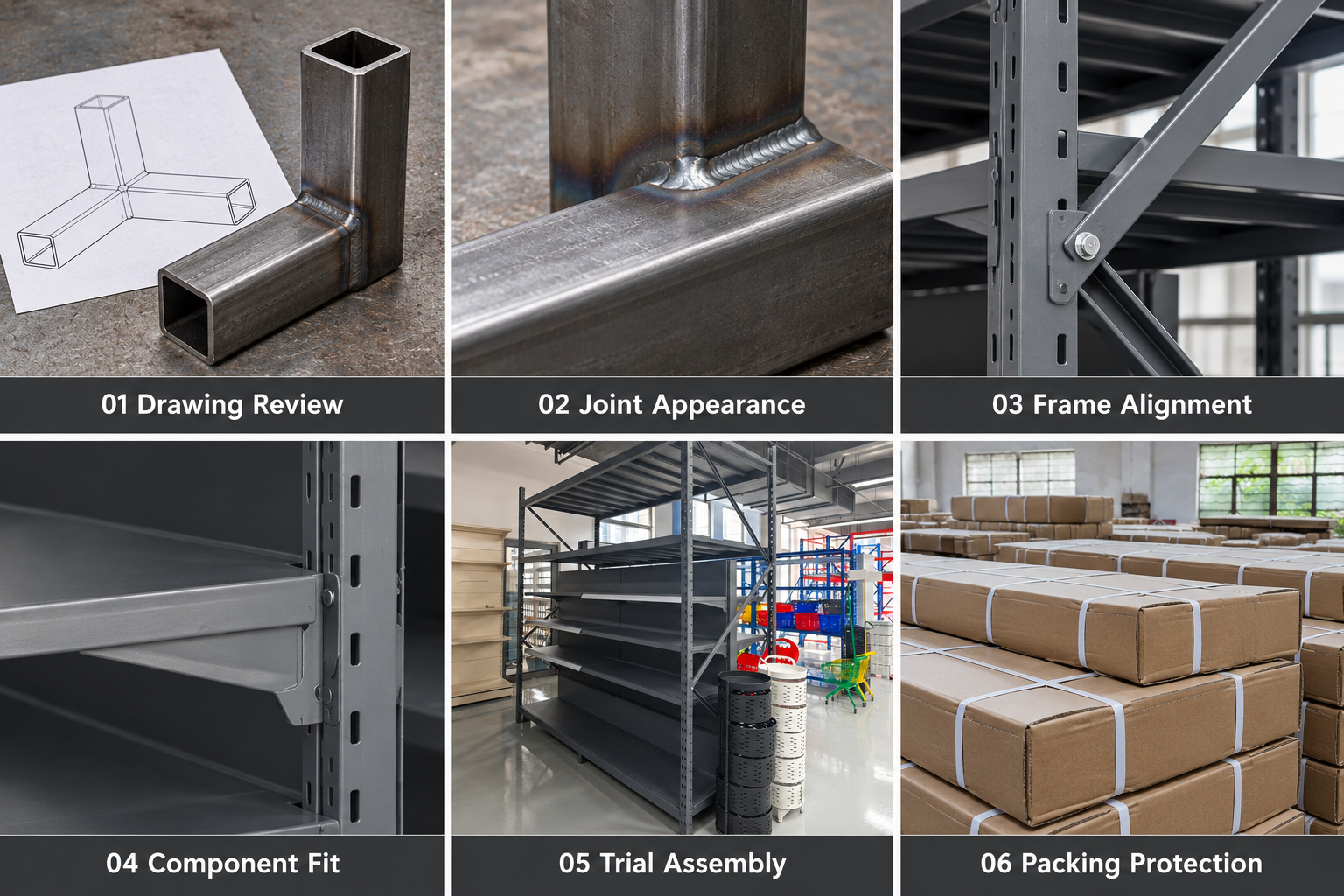
A sample allows buyers to review the fabricated frame with its shelves, rails, brackets or accessories. This confirms whether the joined assembly works with the remaining components and the intended installation sequence.
Approved changes should be recorded before bulk production. Moving a support, changing a tube section or revising a joint can affect material usage, fabrication time and packing.
Trial assembly confirms fit; it does not establish a load rating by itself. Any required load check should follow an agreed configuration, procedure and acceptance criteria through trial assembly and load review.
 Planning Bulk Production and Export Packing
For bulk orders, the approved drawing and sample define the fabrication reference. Similar-looking frames and supports should remain identifiable as they move into finishing and packing.
Fully welded assemblies generally require more shipping space than detachable components. Buyers should provide rack drawings, quantities, material and finish requirements, installation preferences and delivery details when requesting a quotation. These determine the sample scope, production schedule and suitable export packing arrangement.