


Confirming Materials Before Production
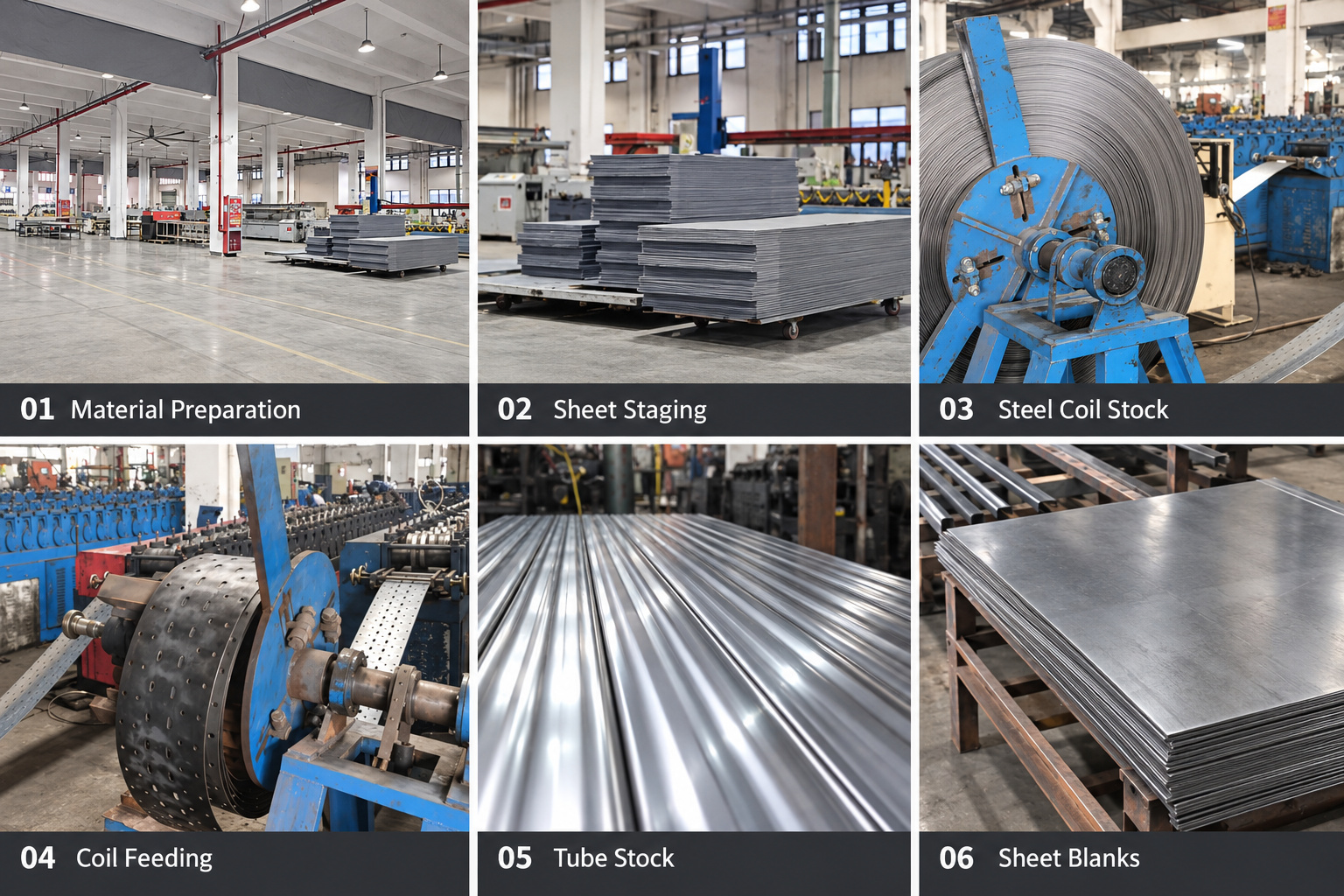
Material preparation starts with the approved rack specification. Supermarket shelving, stainless steel kitchen racks, garment display racks and shoe racks use different combinations of sheet metal, tubes, wire and connecting parts. The material must suit the product structure, intended use and agreed finish.
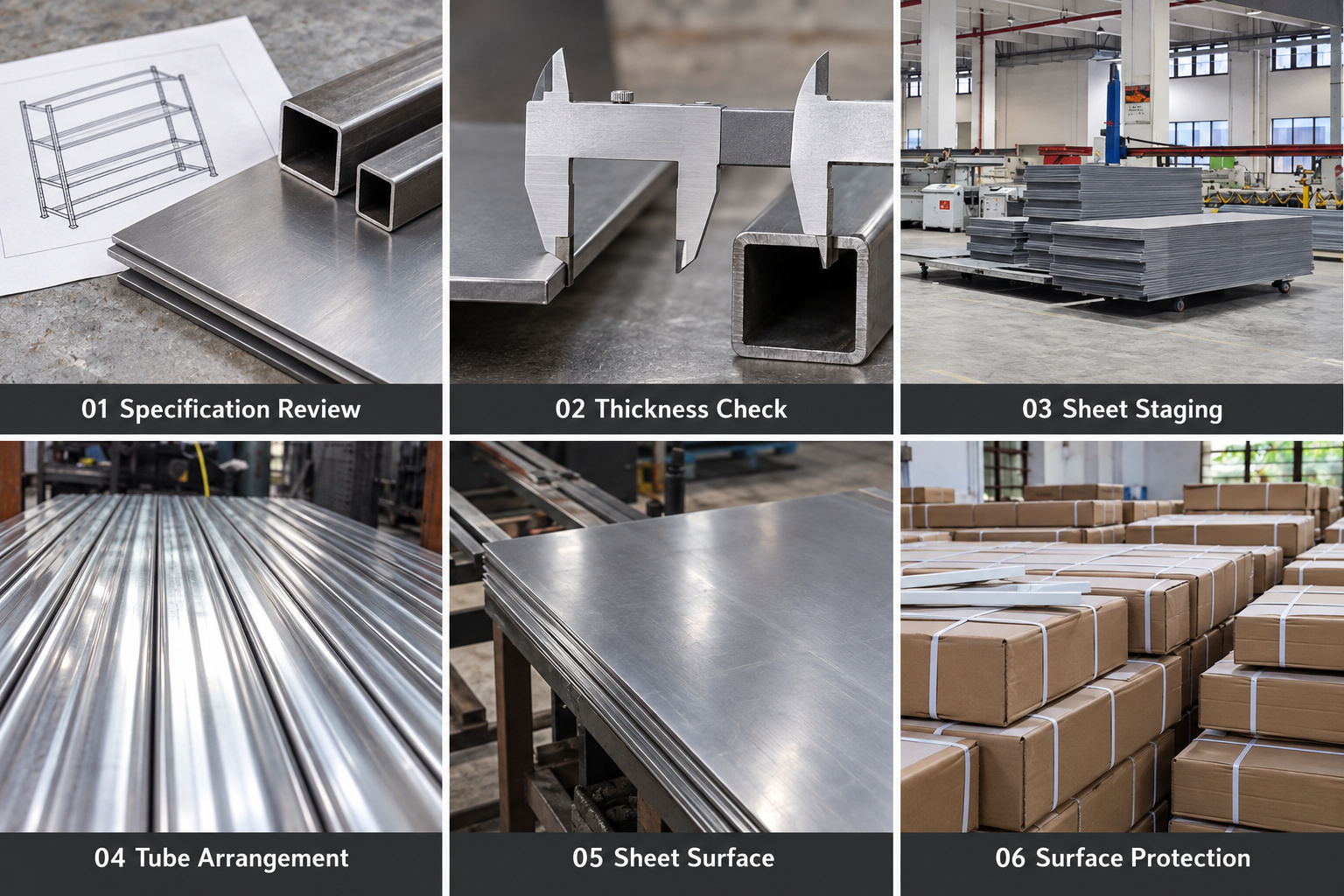
For OEM orders, we review drawings, reference samples and material requirements before preparing components. Buyers should identify any required steel grade, thickness or stainless steel specification. Details that remain undecided need confirmation before sampling or bulk production.
Selecting Sheets, Tubes and Wire Components
Steel sheets are commonly used for shelves, back panels and brackets. Square or round tubes may form frames, hanging rails and supports. Wire can be used for baskets, mesh shelves and display accessories, depending on the rack design.
Material selection considers how each component will be formed, joined and finished. A tube section must accommodate its connection method, while sheet thickness affects bending, component weight and assembly fit. Increasing thickness alone does not establish the load capacity of a complete rack.
Our material and steel specification options help buyers define these requirements before a quotation is finalized.
 Checking Incoming Material
Incoming material checks focus on the characteristics relevant to the approved order: material identification, specified thickness or section size, visible surface condition and suitability for processing.
Dents, corrosion, excessive distortion or damaged surfaces may affect forming, appearance or assembly. Stainless steel components also require attention to handling marks and surface consistency where the finish remains visible.
If a purchase requires material documentation or additional verification, buyers should state this when requesting a quotation. Document availability and any testing arrangements need confirmation for the specific order.
Preparing Material for Processing
Once specifications are confirmed, materials are organized by component and production batch. Preparation includes reviewing cutting requirements, separating different sections and identifying parts that need particular surface handling.
Cut lengths and sheet layouts affect material usage, processing time and cost. Matching preparation to the approved design helps reduce unnecessary waste and keeps components ready for subsequent forming and fabrication.
For stainless steel parts, handling and storage should limit contact that could scratch or contaminate visible surfaces. Prepared materials must remain identifiable as they move through production.
Keeping Samples and Bulk Orders Consistent
An approved sample provides a reference for material selection, component fit and finished appearance. Before bulk production, the confirmed specification should record the material details that affect the result.
A proposed substitution requires review because it can change weight, forming behavior, connections, finish or cost. Buyers should also specify whether repeat orders must follow the previous material specification.
The sample development process provides an opportunity to resolve these details before committing to a larger order.
 Material Details Needed for a Quotation
Please provide the rack type, dimensions, order quantity, intended application and available drawings or reference photographs. Include required material grades, thicknesses, tube sections and surface finishes where specified.
Material availability, minimum purchasing quantities and nonstandard sections can affect sample timing and bulk order lead time. Where requirements are still open, we can review suitable options for confirmation.
Clear material requirements allow the quotation, sample and production plan to follow the same specification.