


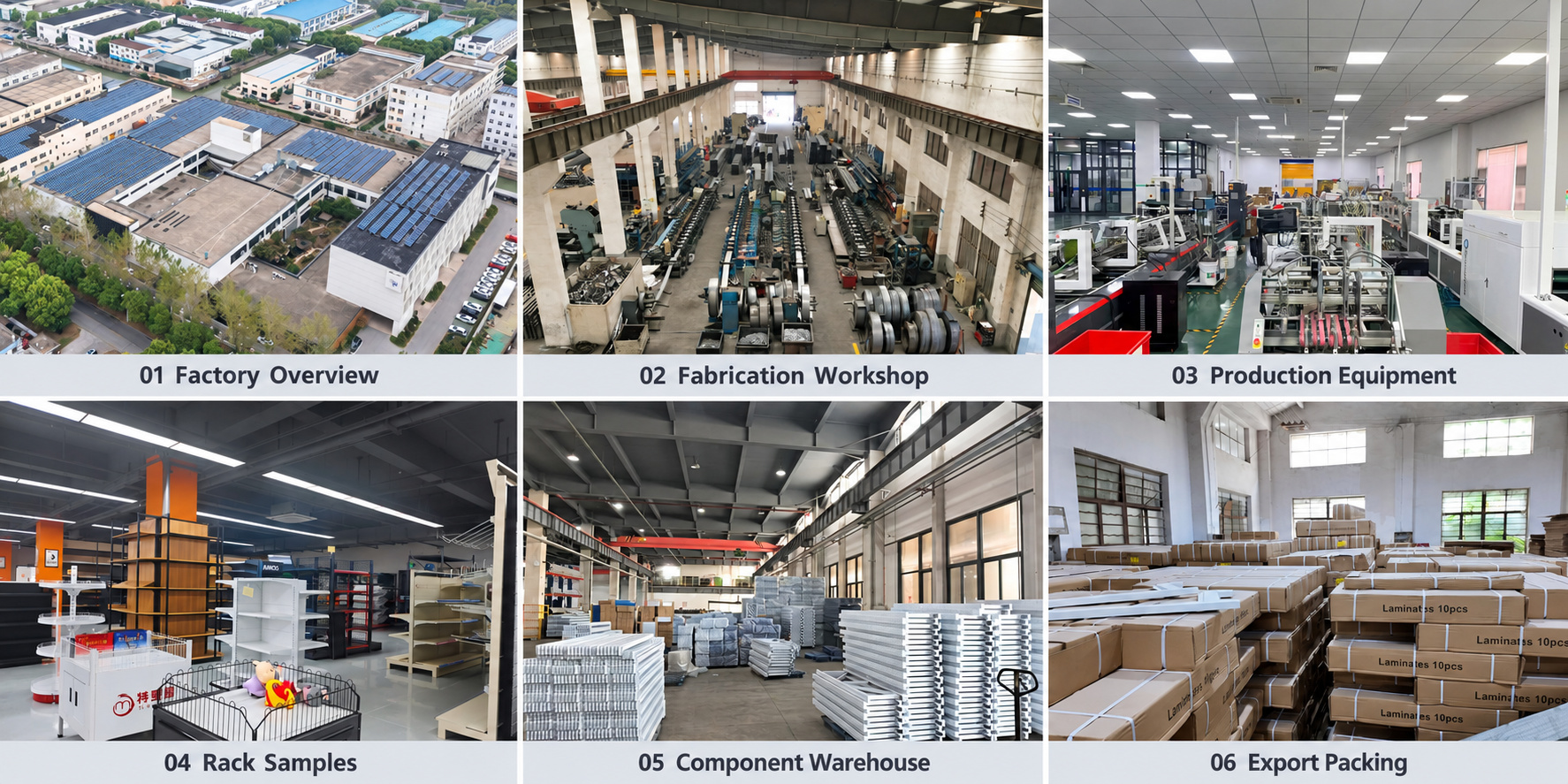
 Manufacturing Around the Approved Rack Specification
Beamvora Racks manufactures supermarket racks, stainless steel kitchen racks, clothing display racks and shoe racks for importers, distributors, retail chains and shopfitting contractors. We also review pallet racks, cantilever racks, FIFO systems and mezzanine structures according to project configuration and technical requirements.
Production follows the confirmed dimensions, materials, structure, finish, accessories and packing requirements. Different rack types require different fabrication routes. A tubular garment frame, perforated supermarket panel and structural racking component do not pass through an identical sequence of operations.
Material Preparation and Component Requirements
Steel sheet, tube, wire and stainless steel are checked against the required material and dimensions before fabrication. Relevant specifications may include sheet thickness, tube section, wall thickness, wire diameter and the dimensions of purchased accessories.
Our material preparation process establishes the basis for subsequent cutting and forming. Stainless steel 201 or 304 can be reviewed for suitable kitchen rack designs, while Q235 or Q355 steel can be specified for appropriate structural projects.
Material requirements are considered with the rack configuration and intended loads. Proposed changes need review before they affect approved components or production planning.
Cutting, Punching and Forming
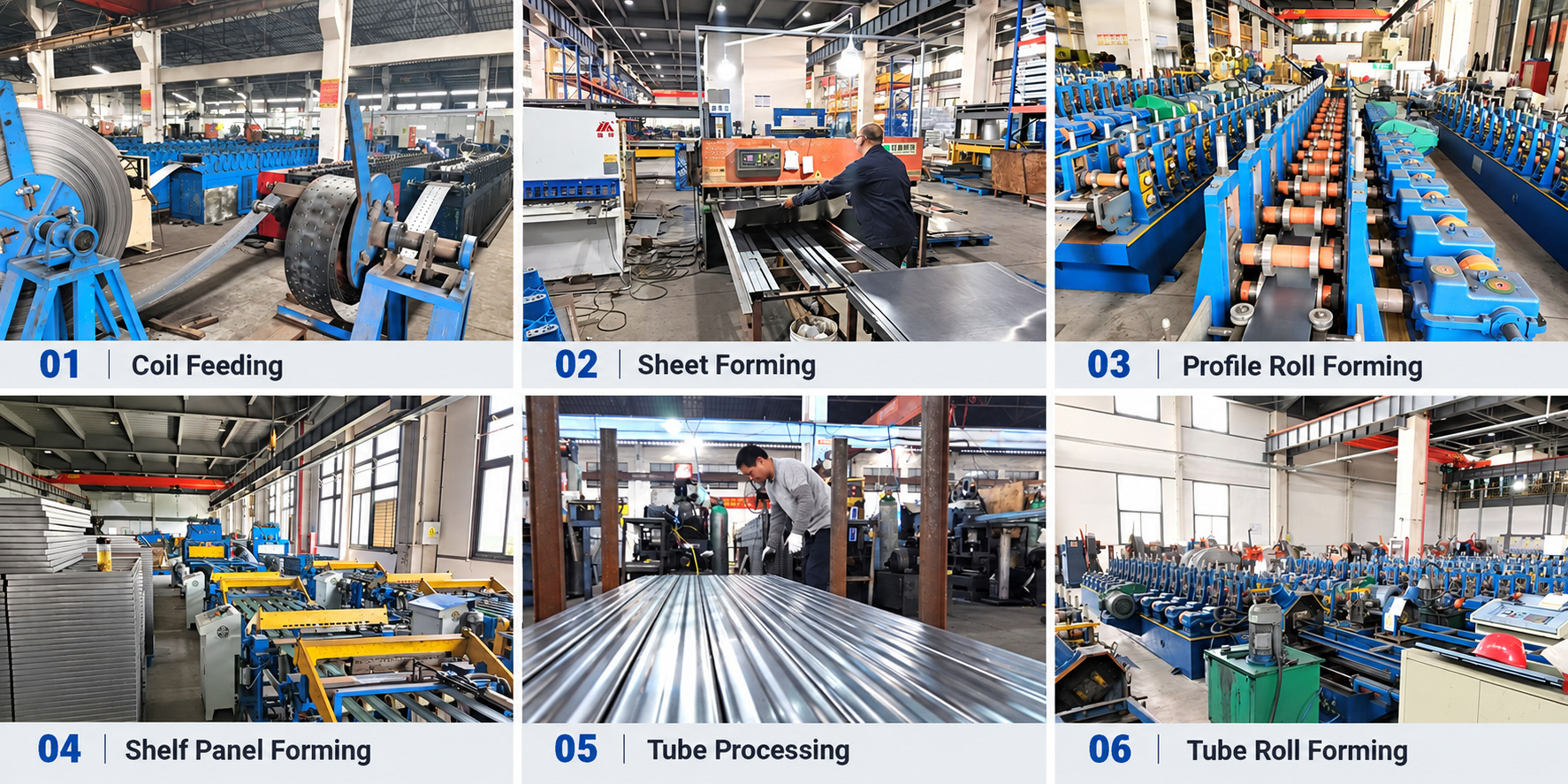
Laser cutting, punching and drilling are selected according to component geometry, hole patterns and connection requirements. Shelf panels, brackets and perforated components need accurate profiles and positions so they can fit the approved assembly.
Press-brake bending, roll forming and tube processing produce the shapes required for shelves, uprights, beams and frames. During cutting and punching, dimensions and connection features are reviewed against the relevant drawing. Formed edges and sections must remain compatible with supports, fasteners and adjustable parts.
 Welding, Fabrication and Surface Preparation
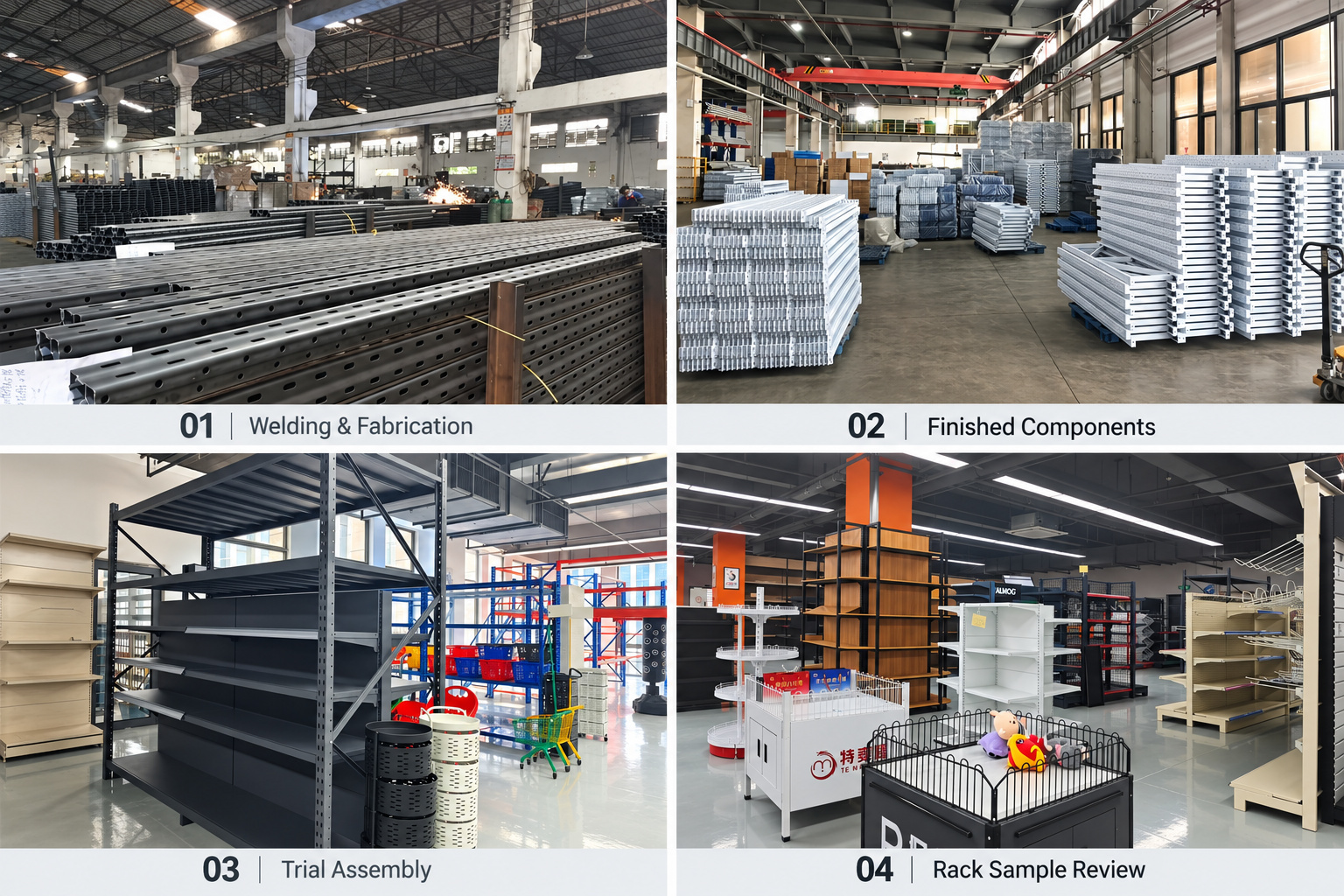
Welding joins the relevant frame and component assemblies. Joint positions, alignment and structural consistency are checked during fabrication. Components should remain compatible with the approved dimensions and assembly arrangement after joining.
Our welding and fabrication work is followed by suitable grinding and surface preparation. Weld areas, edges and accessible surfaces are prepared for the specified finish. Preparation needs vary with the material and component, particularly where finished surfaces remain visible on commercial displays.
The manufacturing route is selected for the product rather than treating every rack as a welded structure.
Powder Coating and Stainless Steel Finishing
Powder-coated colors, stainless steel finishes and other applicable treatments are reviewed against the approved product requirements. Color references or physical samples help establish the expected appearance of frames, shelves, panels and accessories.
Finishing must also preserve practical component fit. Connection areas, holes and adjustable positions need attention alongside visible surfaces. Inspection can cover coating appearance and thickness where relevant to the agreed specification. Additional finish tests should be confirmed before ordering.
 Trial Assembly and Product Inspection
Trial assembly checks whether fabricated and finished components work together. Relevant points include hole positions, shelf alignment, connections, hardware, accessory placement and stability. A visually acceptable component still needs to fit its corresponding support or frame.
Inspection follows the requirements applicable to the rack type. Dimensions, weld condition, coating, component fit and packing are reviewed against approved information. Load or structural testing is arranged for selected products and projects when required by the agreed specification.
Buyers can also request coordination of buyer-appointed or third-party inspection, with the scope and timing confirmed for the order.
Packing and Export Preparation
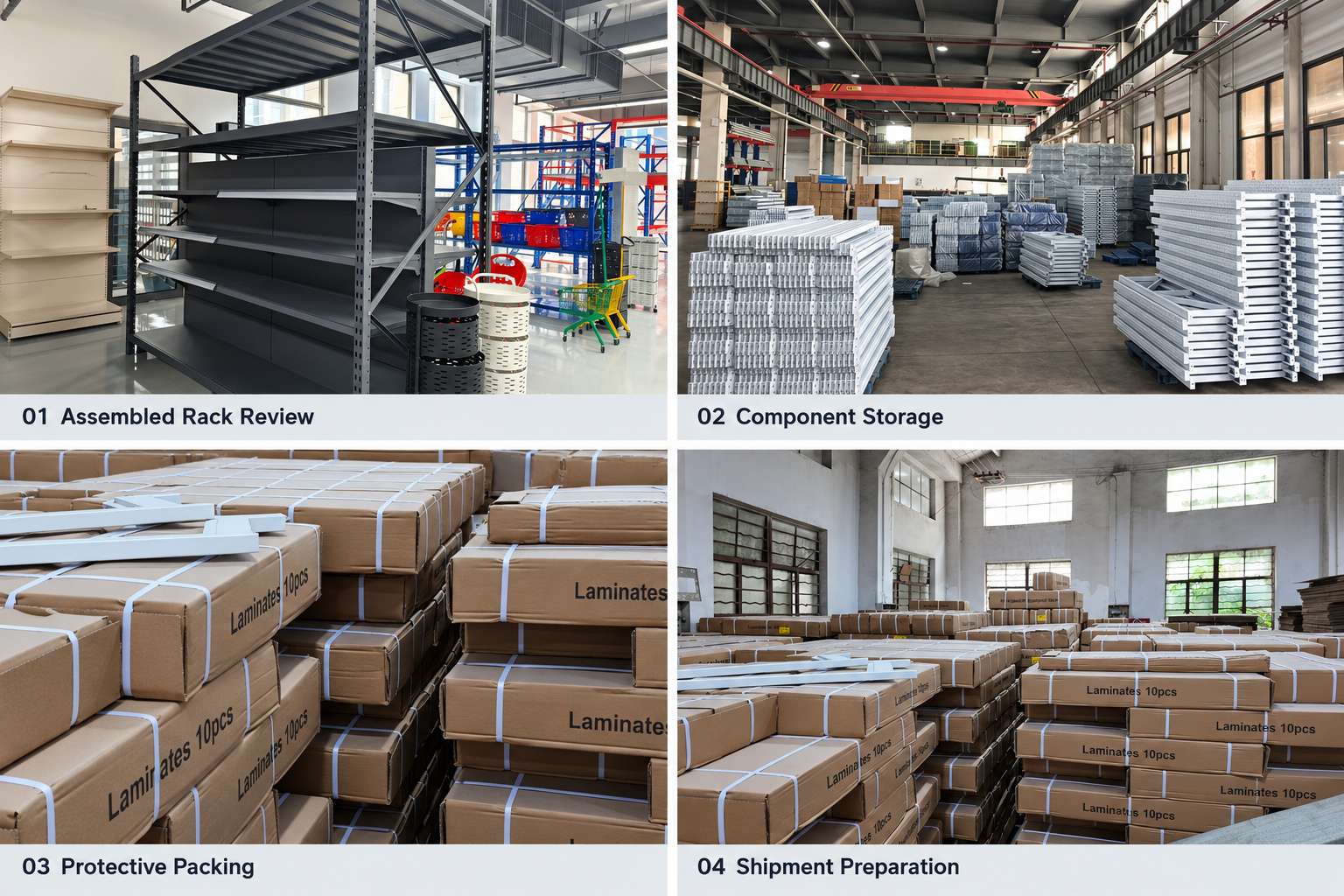
Before shipment, component quantities, hardware kits, accessories, labels and carton marks are checked against the order. Packing may use knock-down cartons, PE or EPE protection, corner protectors, bundles, pallets or heavier protective arrangements.
Our packing and export preparation considers component shape, finish, handling and shipment method. Packing lists and shipment coordination follow the approved arrangement. EXW, FOB, CIF and selected DDP terms are reviewed according to the order and destination.
 Confirm Production Timing and Quotation Details
Standard orders are generally planned for around 25–35 days after specification confirmation. Customized retail and display programs normally require around 30–45 days. Larger industrial projects may require around 35–60 days, depending on scope and scheduling.
For production review, send the rack type, application, drawings or reference images, dimensions, quantity, relevant loads, materials, finishes and accessories. Include inspection, packing and destination requirements so we can confirm the quotation basis and production schedule.