


Reviewing the Complete Rack Before Bulk Production
Trial assembly brings the rack components together to confirm that the approved design can be assembled as intended. It helps identify connection problems, missing parts and clearance issues before they affect a bulk order.
For supermarket shelving, stainless steel kitchen racks, garment displays and shoe racks, we review the selected configuration with its shelves, supports, rails and accessories. Importers, distributors and OEM buyers should confirm the intended application and installation arrangement when requesting a sample.
Assembly review and load checks serve different purposes. A rack that assembles correctly still needs separate evaluation against any agreed load requirements.
Checking Connections and Installation Sequence
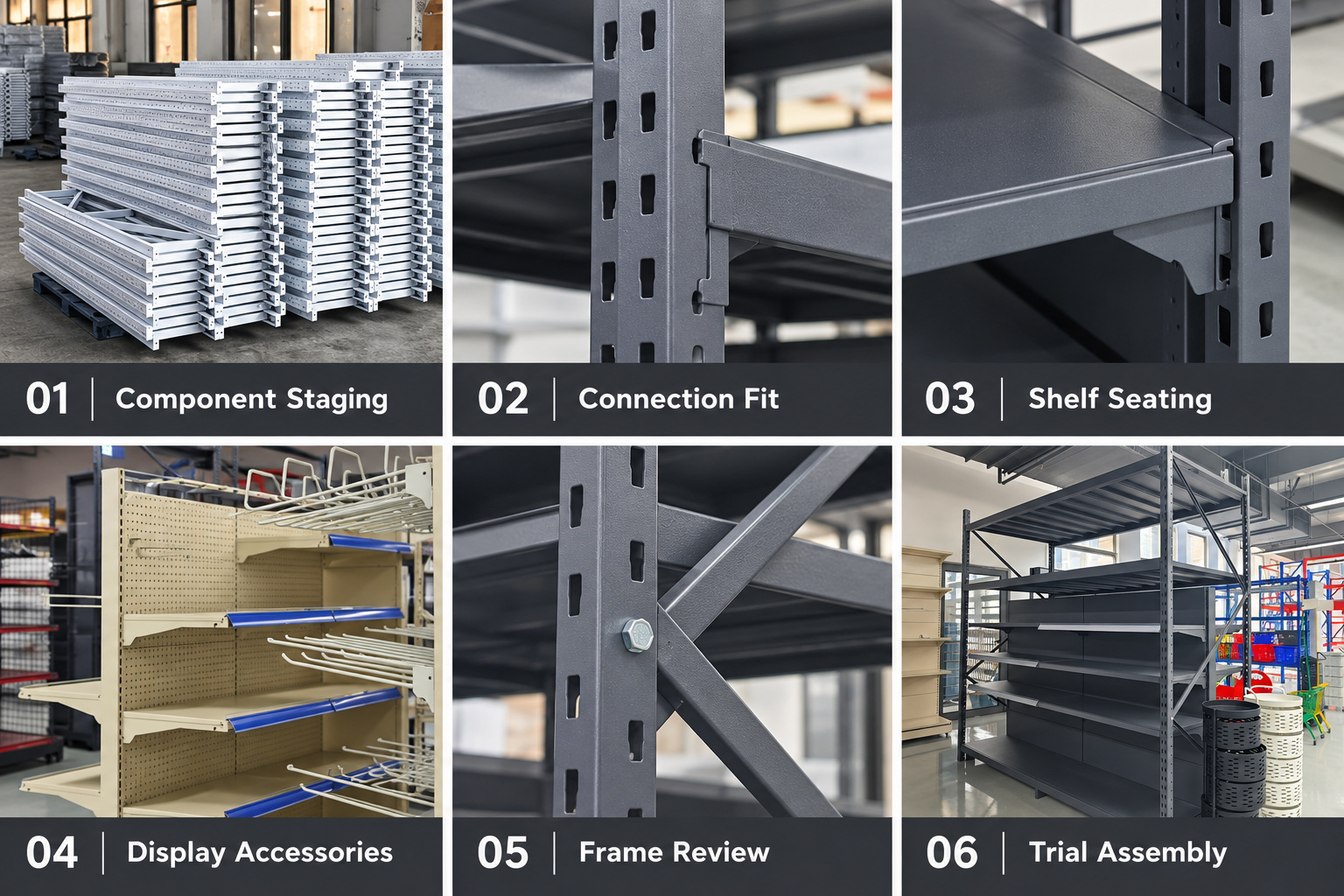
Trial assembly focuses on how uprights, shelves, brackets, braces and fasteners work together. Connections should engage as specified without forcing parts into position or modifying holes during installation.
We review shelf seating, bracket engagement, frame alignment and access to fixing points. For detachable racks, the assembly sequence should also allow installers to identify and connect the supplied components clearly.
Coated parts need particular attention because the finish can affect close-fitting connections. Our size and structure customization review establishes the dimensions and clearances that trial assembly needs to confirm.
 Confirming Shelves, Rails and Accessories
The assembled sample should reflect the configuration buyers plan to order. Shelf spacing, hanging clearance and accessory positions need review with the intended merchandise or storage requirements in mind.
Hooks, baskets, dividers, casters and adjustable feet can introduce additional fit requirements. An accessory that connects successfully may still obstruct another component or reduce usable space.
Please identify the required accessory combination before sampling. The shelves, hooks and accessories specification helps keep the sample and bulk order consistent.
Agreeing on the Load Check Requirements
A meaningful load check starts with a defined rack configuration. Buyers should specify the intended load per shelf or rail, how that load is distributed and the installation conditions.
Shelf-level loads and total rack loads should be distinguished. Bracing, anchoring, shelf positions and supporting surfaces can affect the result, so these details need to be recorded with the agreed procedure.
We review the requested check, acceptance criteria and available arrangements before confirming the scope. Where formal testing or third-party assessment is required, the applicable method and reporting requirements must be agreed separately. A sample check does not establish certification or a universal load rating.
Recording Sample Approval and Production Changes
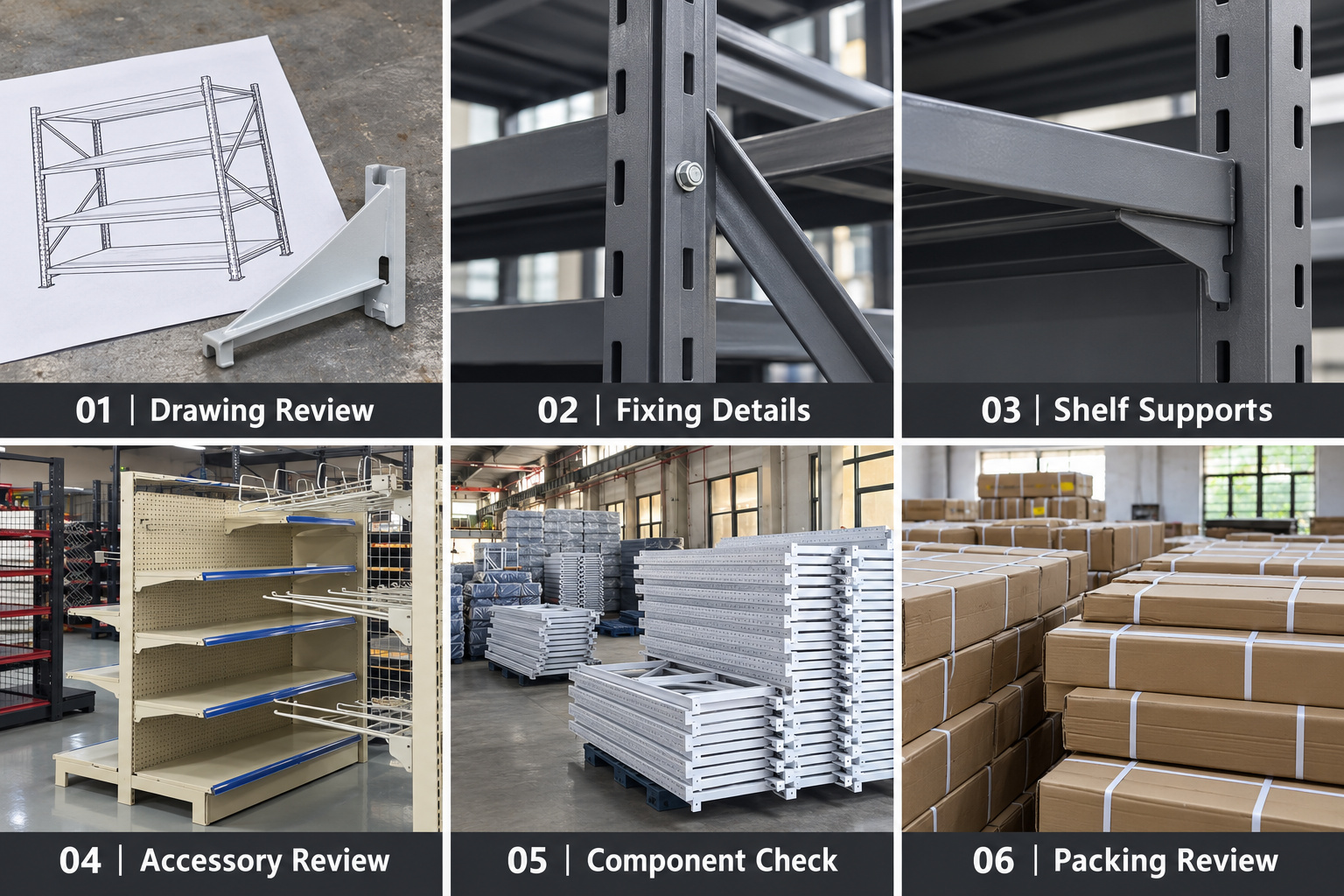
Assembly findings should be resolved before bulk production. Changes to brackets, hole positions, shelf supports or accessory connections need to appear in the approved drawing and component list.
Approval should identify the reviewed configuration, finish and accessories. Load-related observations, where a check has been agreed, should remain tied to that specific setup.
Repeat orders should follow the confirmed specification. Material or structural substitutions require review because they can affect both fit and performance.
 Connecting Assembly Approval with Packing and Delivery
The approved assembly should match the components supplied in each packed set. Fasteners, accessories and assembly information need to follow the agreed configuration so that buyers can install the racks after delivery.
Our packing and export preparation review covers component grouping and protection during transport.
For a quotation, please send the rack type, dimensions, quantities, accessory requirements and intended loads. Include any required inspection procedure, sample approval process and delivery details so we can confirm the review scope and production schedule.