


Preparing Profiles, Holes and Slots
Cutting and punching establish the component shapes and connection features used in commercial racks. Shelf blanks, brackets, back panels and uprights may require different combinations of profiles, mounting holes and adjustment slots.
For supermarket shelving, kitchen racks, garment displays and shoe racks, these features must match the approved structure. We review the component drawing, material specification and order quantity before confirming the processing route. Laser cutting and punching are selected according to the part; not every component requires both.
Choosing the Appropriate Processing Route
Laser cutting can suit shaped sheet components, prototype parts and profiles that need flexibility during development. Punching can suit repeated holes, slots and patterns where suitable tooling is available.
The choice depends on material thickness, geometry, quantities and tooling requirements. A small sample order may follow a different route from repeat bulk production. Any proposed change must preserve the agreed dimensions, connection fit and finished appearance.
Buyers should identify mandatory processing requirements at quotation stage. Available methods, tooling needs and any external processing arrangements should be confirmed for the specific project.
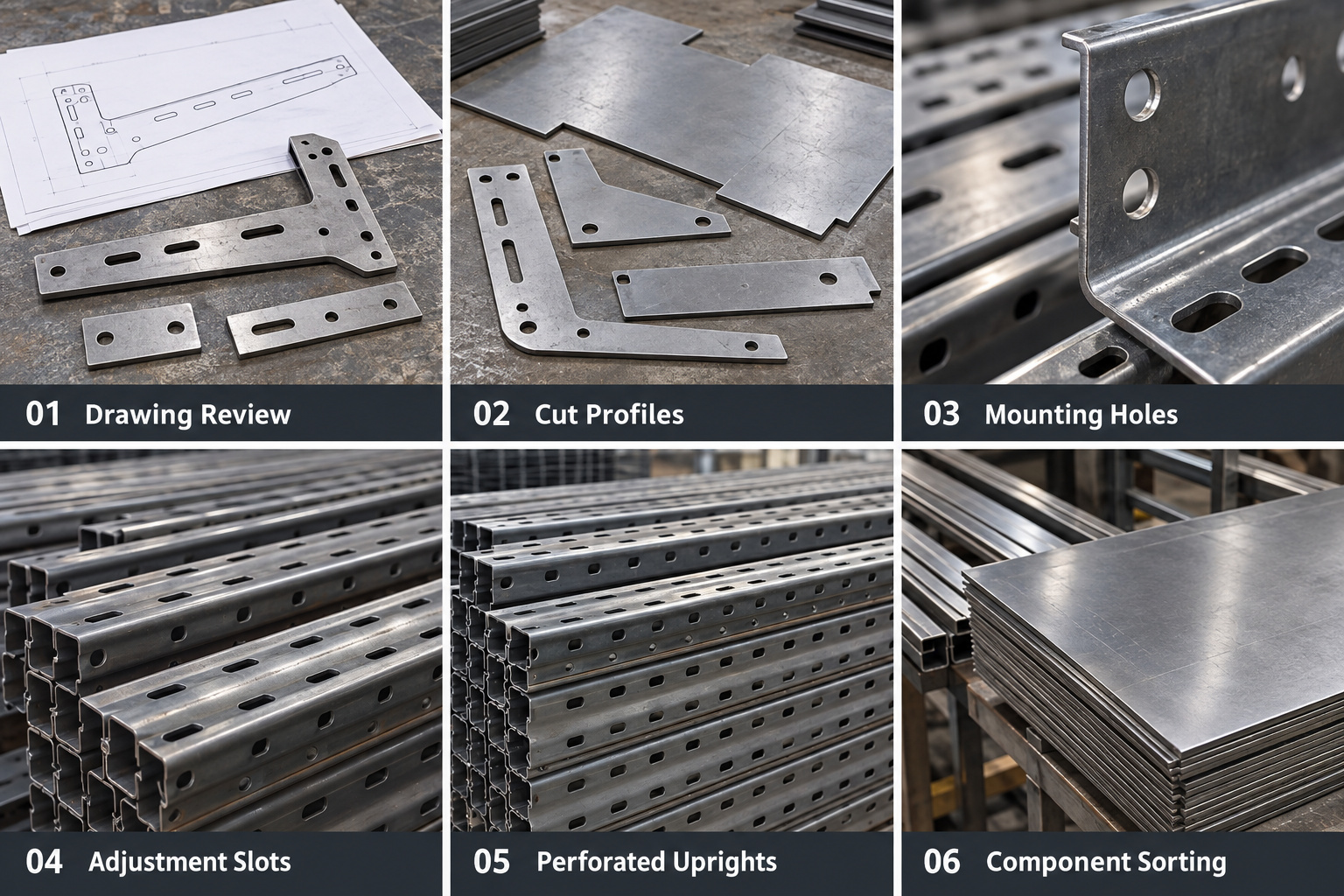 Confirming Drawings Before Sampling
A usable drawing should define the component outline, hole sizes, slot shapes and their positions relative to connection points. It should also identify material, thickness and any dimensions that require particular control.
Reference photographs help explain appearance, but they rarely provide enough information for accurate production. Where drawings are incomplete, the details need clarification before a sample is made.
For adjustable shelving, the slot pattern must work with the selected bracket or hook. Our size and structure customization review connects these component details with the complete rack layout.
Checking Edges and Connection Fit
Cut and punched components are reviewed for profile accuracy, hole placement, distortion and burrs. Sharp edges or rough openings can affect handling, assembly and subsequent finishing.
Connection features require particular attention. A hole that appears acceptable on its own may still prevent a bolt, bracket or accessory from fitting correctly. Selected mating parts should therefore be checked together during sample development.
Surface finishing can also affect tight connections. Clearances need to account for the agreed finish where coated parts fit together. Further grinding and surface preparation may be required before finishing.
Moving Approved Parts into Bulk Production
The approved drawing and sample establish the reference for repeat production. Changes to hole spacing, slot patterns or component outlines should be recorded before the production batch begins.
Tooling setup, material usage and the number of processing operations affect cost and lead time. Closely spaced holes, complex profiles or frequent design revisions may require additional review.
Processed parts should remain separated and identifiable through forming, welding and assembly. This helps prevent similar-looking brackets or panels from being mixed between rack configurations.
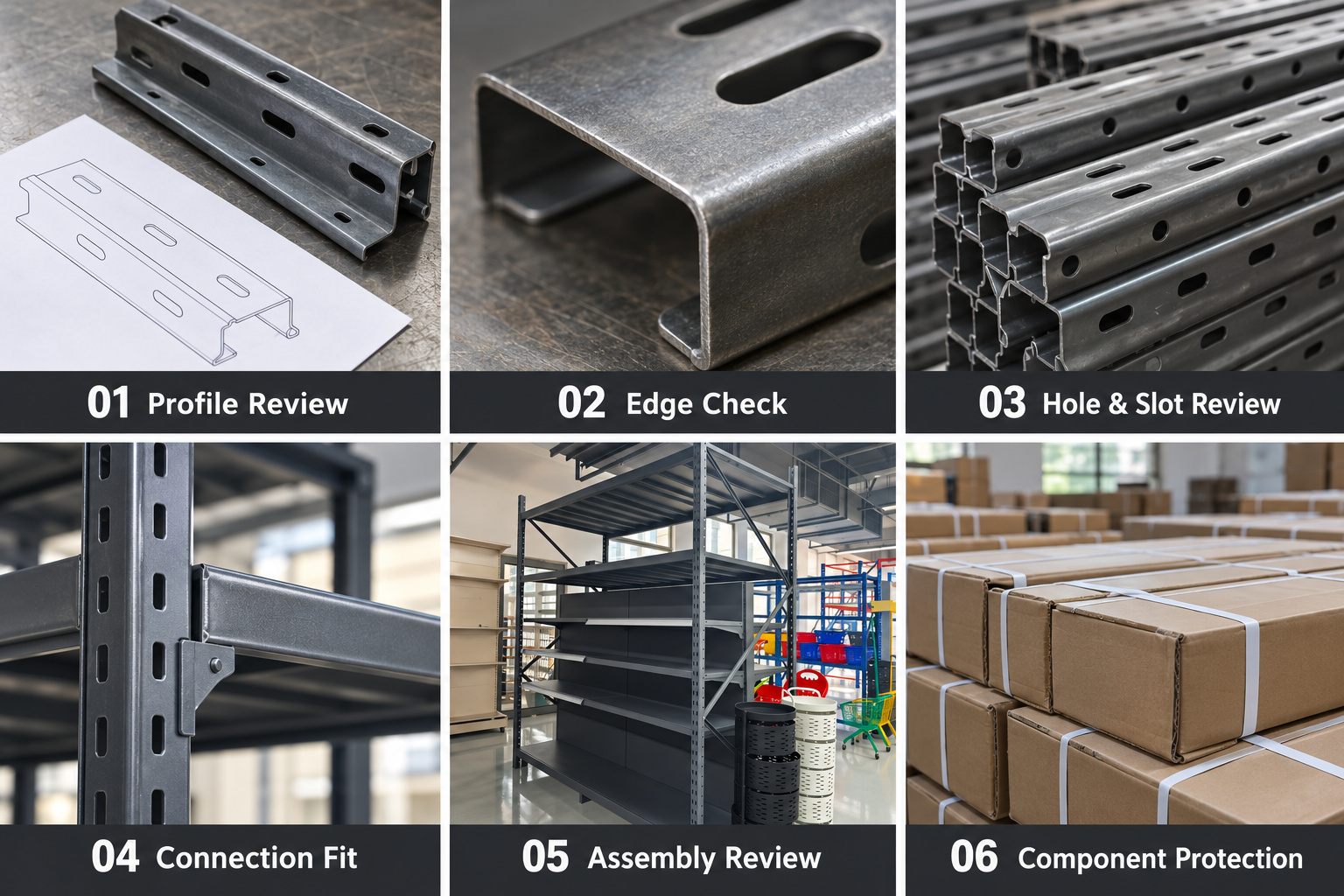 Information Needed for a Quotation
Please send component drawings or rack references, material requirements, order quantity and the intended assembly method. Identify critical holes, slots, visible edges and any required sample approval.
We can then review the processing route, tooling implications and sample scope. Packing and shipment requirements for separately supplied components should also be specified so that exposed edges and finished surfaces receive suitable protection.