


Preparing Fabricated Parts for the Agreed Finish
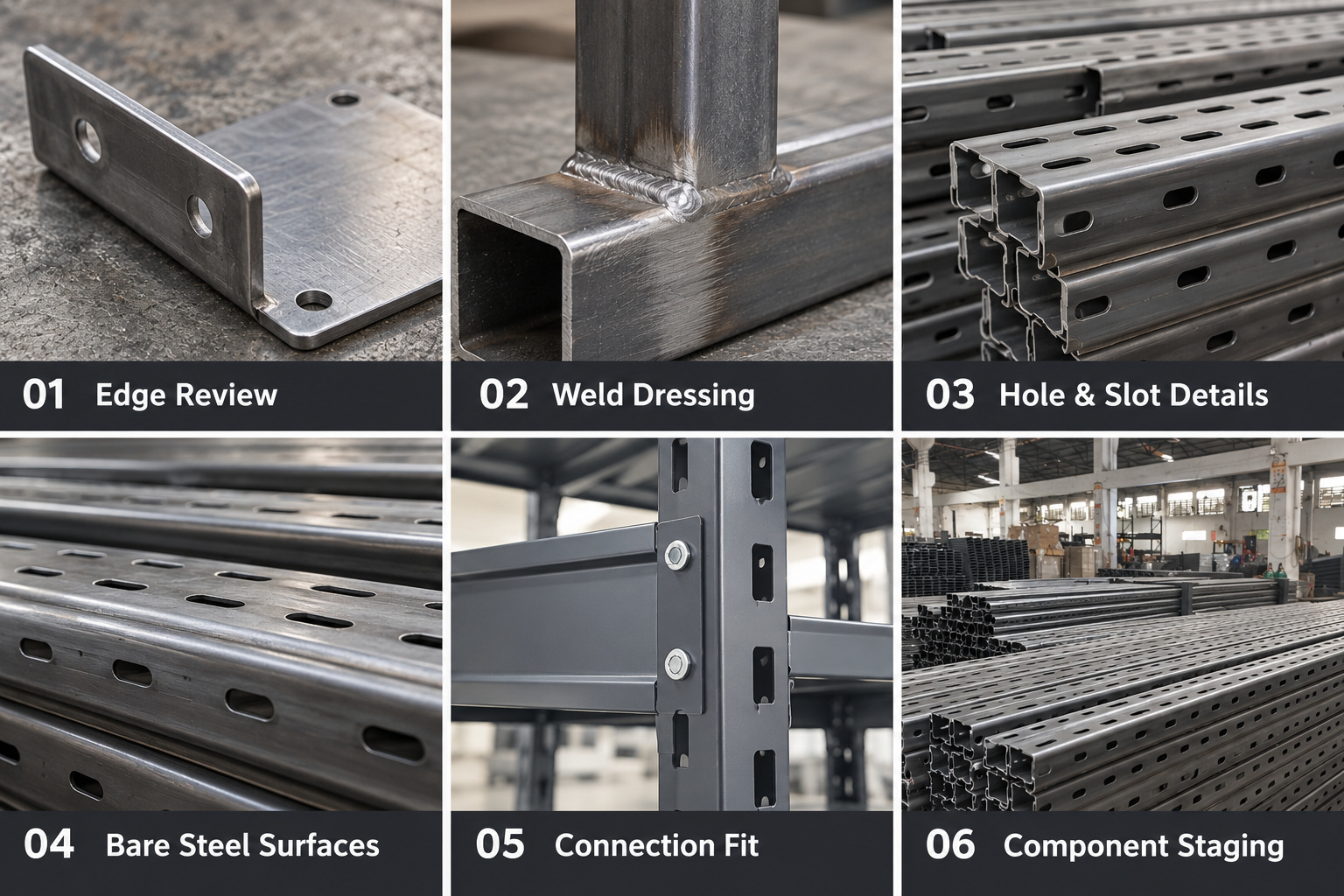
Grinding and surface preparation address edges, welded areas and surface conditions before rack components move into finishing. These details affect handling, visible appearance, coating results and assembly fit.
For supermarket shelving, stainless steel kitchen racks, garment displays and shoe racks, the preparation requirements depend on the material, construction and approved finish. We review exposed edges, visible joints and connecting surfaces during sample development so that bulk production follows a clear reference.
Removing Burrs and Sharp Projections
Cutting, punching and fabrication can leave burrs around component edges, holes and slots. These areas need attention where buyers or installers will handle parts, or where rough edges could interfere with assembly.
Deburring should remove unwanted projections while preserving the specified component shape. Excessive removal can enlarge an opening, alter a connection or leave an uneven edge.
Shelf edges, brackets, hanging rails and accessory mounting points require checks appropriate to their use. Parts that connect together should be reviewed after preparation to confirm that the intended fit remains intact.
 Dressing Welded Areas Without Changing the Joint
Visible welded areas may require cleaning or controlled dressing to meet the approved appearance. Spatter and sharp projections can create handling issues or remain noticeable after coating.
A smoother appearance does not mean every weld should be ground flush. Preparation must respect the joint design and avoid removing material needed for the specified construction.
Buyers should identify visible surfaces and any appearance requirements before sampling. The preceding welding and fabrication stage should account for these requirements rather than leaving them to final finishing.
Preparing Steel for Powder Coating
Steel surfaces need suitable cleaning and preparation before powder coating. Oil, contamination, loose scale or corrosion can affect the finished result and should be addressed through the agreed preparation route.
Mechanical grinding alone does not replace cleaning or pretreatment. The appropriate steps depend on the incoming surface condition, material and coating requirements.
Connection areas also need consideration. Prepared edges and openings must remain suitable for assembly after coating. Our powder coating and finishing review connects surface preparation with the selected color, texture and finish acceptance criteria.
Maintaining Stainless Steel Appearance
Stainless steel kitchen rack components may retain a visible brushed or other agreed surface finish. Local grinding can change the grain direction or create a patch that stands out beside adjoining parts.
We review which surfaces remain visible and whether welded areas require blending with the surrounding finish. Handling should also limit scratches and contamination from contact with other materials.
A physical sample is useful for confirming the expected appearance. Photographs can support the discussion, but lighting and viewing angle can conceal differences in texture.
 Approving Appearance and Protecting Prepared Parts
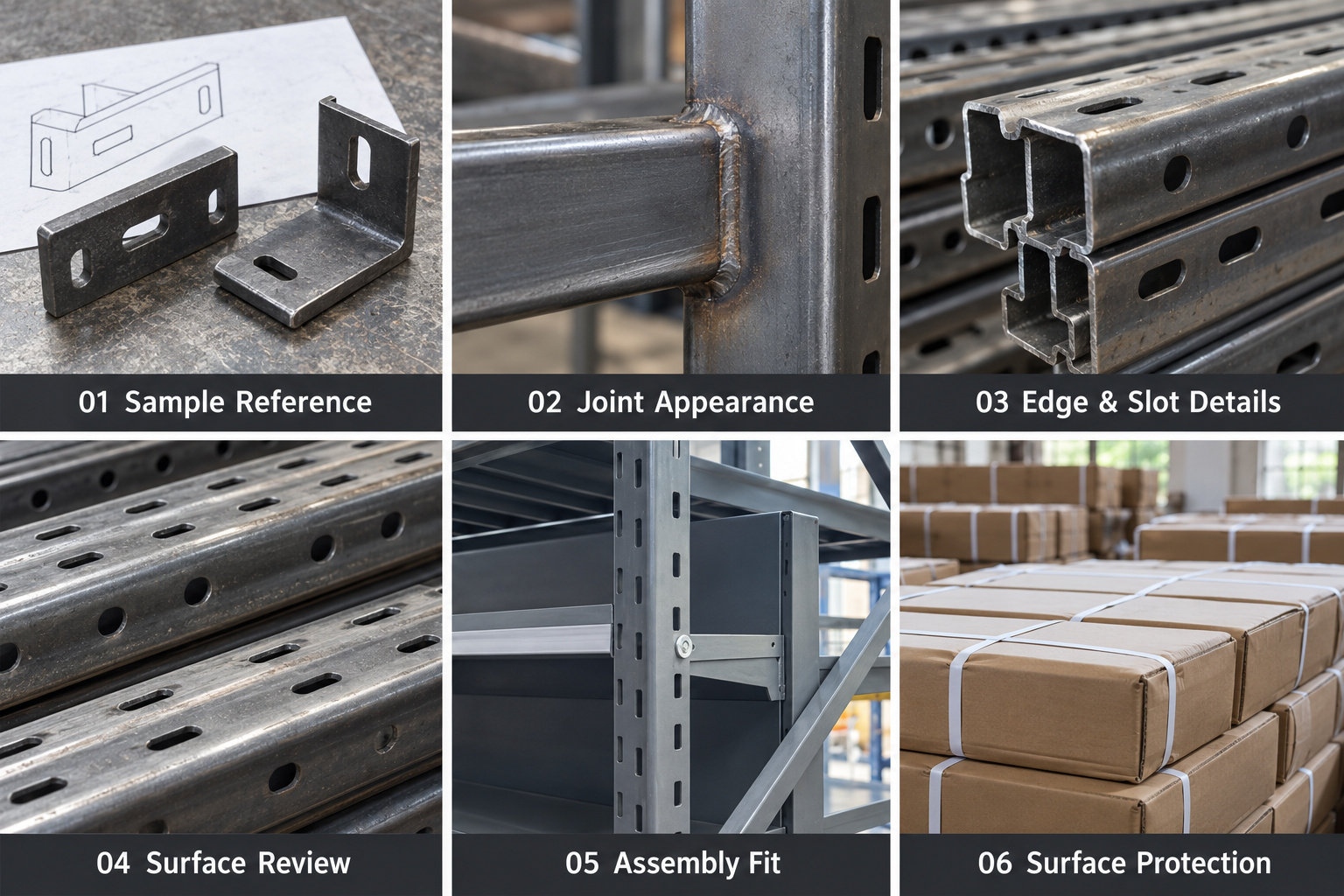
Sample approval should define acceptable edge condition, visible joint appearance and surface texture. Any additional inspection or finish testing requirements need agreement before bulk production.
Prepared components should be handled and separated to reduce scratching before finishing or packing. For exposed stainless steel surfaces, protective materials must suit the agreed appearance and shipping arrangement.
Please provide rack drawings or references, material specifications, quantities, finish requirements and photographs of any critical visible areas. These details help establish the preparation scope, sample work, quotation and production timing for your OEM order.