


Planning Packing Around the Rack Configuration
Packing starts with the approved rack structure and component list. Supermarket shelving, stainless steel kitchen racks, garment displays and shoe racks differ in shape, weight and surface finish, so the packing arrangement needs to suit the actual order.
For importers, distributors and OEM brands, we review whether racks ship as detachable components, partially assembled sections or welded units. This affects carton dimensions, handling, shipping volume and installation after delivery. The packing specification should be confirmed before bulk production is completed.
Protecting Components and Finished Surfaces
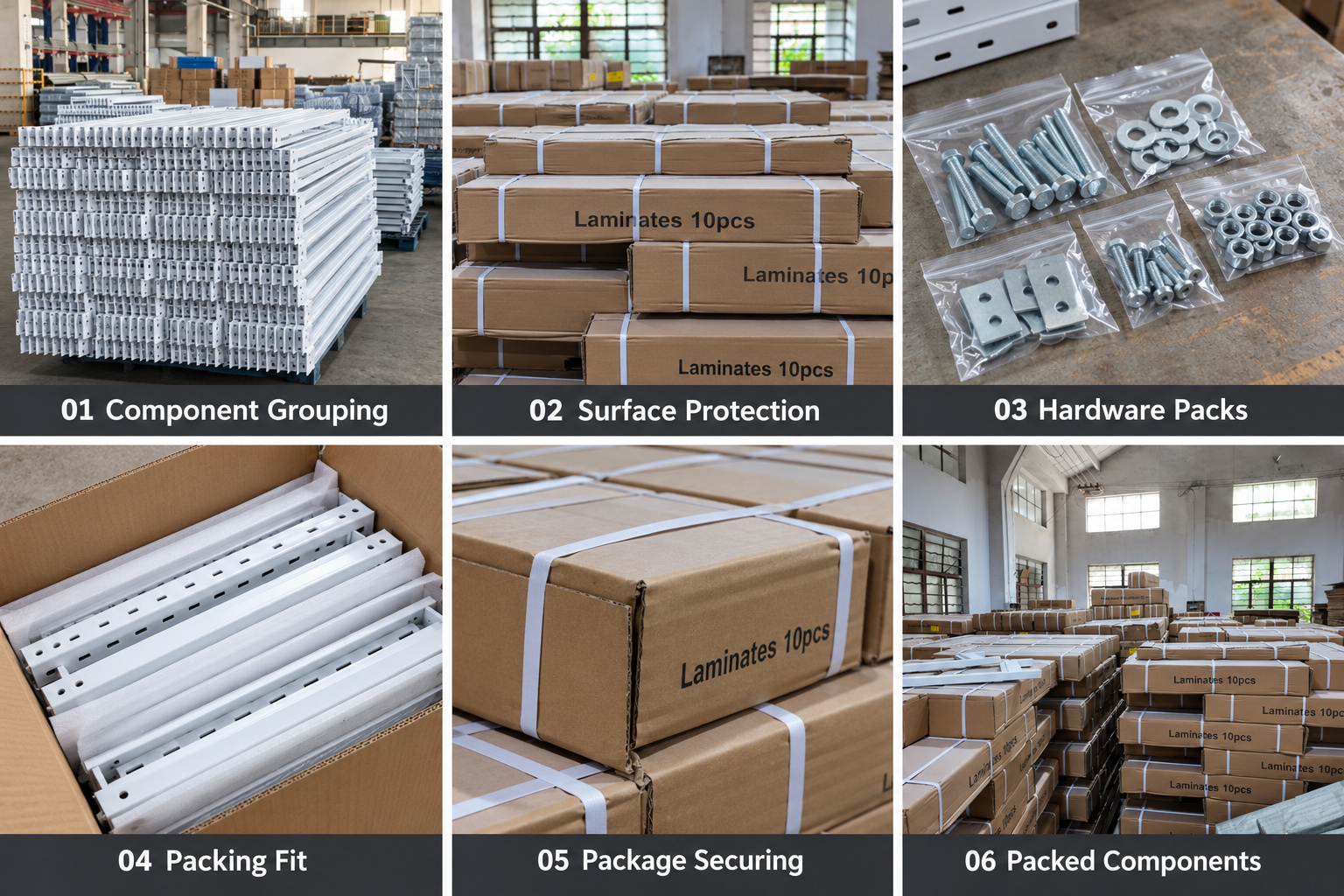
Shelves, uprights, rails and brackets need protection against rubbing, impact and movement inside the package. Depending on the component, this may include separators, wrapping, edge protection or internal supports.
Heavy parts should not press directly against exposed finished surfaces. Protruding brackets and narrow edges also need attention because they can damage neighboring components or puncture the outer packing.
Stainless steel surfaces and coated parts may require different protective arrangements. Buyers should identify critical visible areas and any destination-specific handling requirements during packing review.
 Grouping Hardware and Assembly Information
A packed rack set needs the correct fasteners and accessories as well as the main components. Hardware packs should follow the approved configuration, with quantities agreed for each set or carton.
Similar-looking brackets, bolts and connecting parts need clear identification where they serve different functions. Mixed configurations require particular care to avoid supplying the right overall quantity in the wrong combinations.
Assembly information should match the delivered structure. The trial assembly and load check review helps establish which components and fixing details need to appear in the packing list and installation information.
Confirming Cartons, Labels and Private Label Requirements
Carton layout must accommodate component dimensions, weight and protection materials. A compact arrangement should still allow parts to be removed without damaging their finish.
For private label orders, buyers should provide approved artwork, product identification, barcode files and any required carton markings. Label placement and print content need confirmation before production.
Our private label and packaging options cover these requirements. Branded packing, special carton sizes and additional inserts can affect MOQ, cost and preparation time.
Reviewing Packing Before Shipment
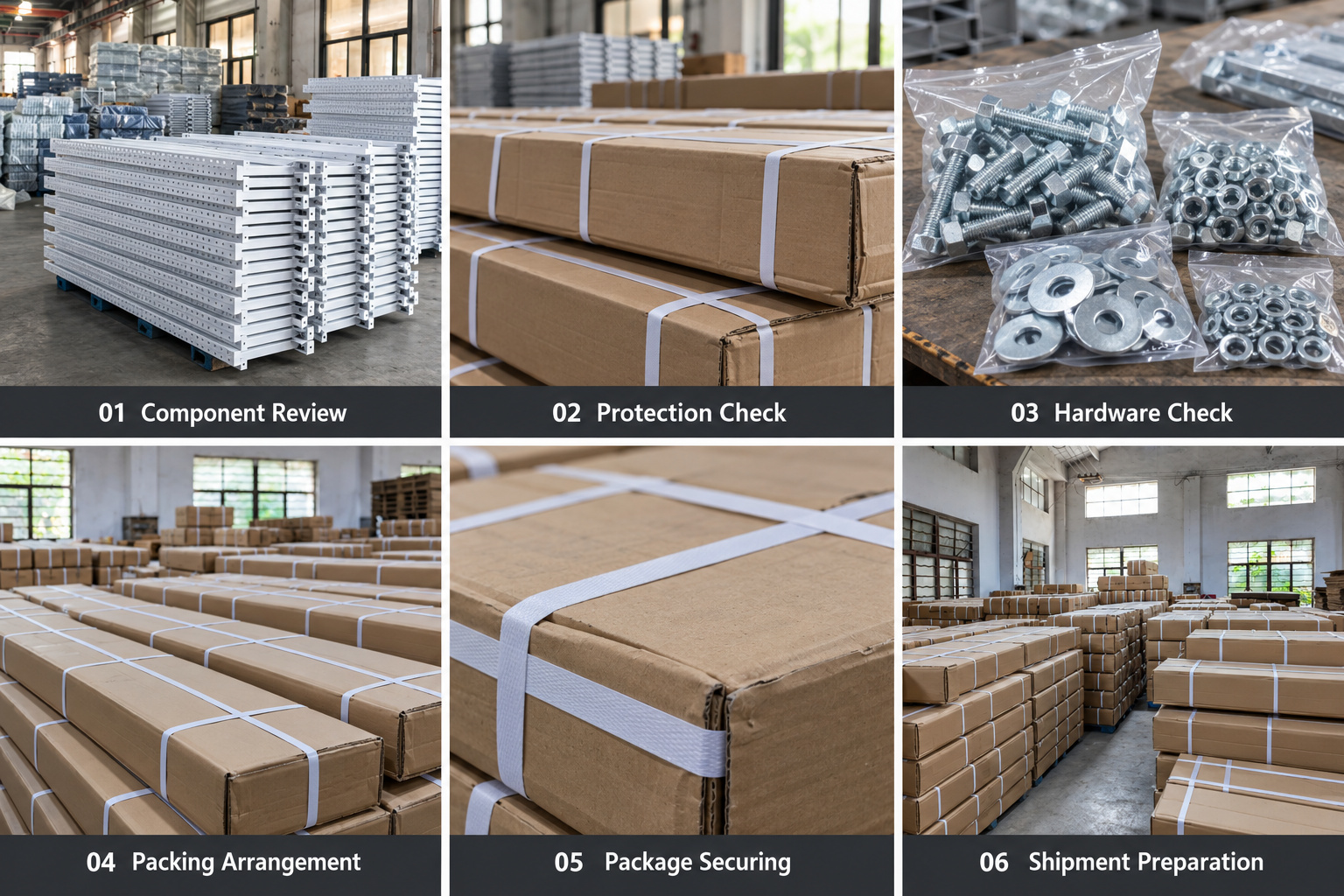
Packing review checks the agreed component combination, hardware packs, protective materials, carton condition and label content. For detachable racks, a sample packing arrangement can help confirm that the complete set fits as intended.
Palletizing or additional outer protection is reviewed according to package weight, shipment method and unloading requirements. Any required packaging tests or third-party inspection should be specified early, with the scope and acceptance criteria agreed separately.
A visually acceptable package does not by itself establish compliance with a transport testing standard.
 Preparing Shipment Information
Before dispatch, packing details need to align with the order and shipping documents. Package quantities, dimensions, weights and product descriptions should reflect the goods being shipped.
The agreed shipping term determines the delivery responsibilities. Available EXW, FOB, CIF or selected DDP arrangements need confirmation for the destination and order; freight timing is separate from the production schedule.
Please provide the rack configuration, quantity, destination, preferred shipping term and packaging requirements with your inquiry. Include private label files, inspection requests and unloading constraints so we can review packing costs and export preparation together.