


Forming Components Around the Approved Rack Design
Bending and roll forming turn prepared steel into the profiles used for rack shelves, uprights, brackets and supports. The resulting shape affects how parts connect, how shelves sit and how the complete rack assembles.
For supermarket shelving, stainless steel kitchen racks, garment displays and shoe racks, we review forming requirements against the approved component drawings. Importers, distributors and OEM buyers should confirm the rack configuration, material specification and connection method before sample production.
Selecting Bending or Roll Forming
Bending is suitable for many sheet components, including shelf edges, brackets and panels. It creates defined folds that give a flat blank its required shape.
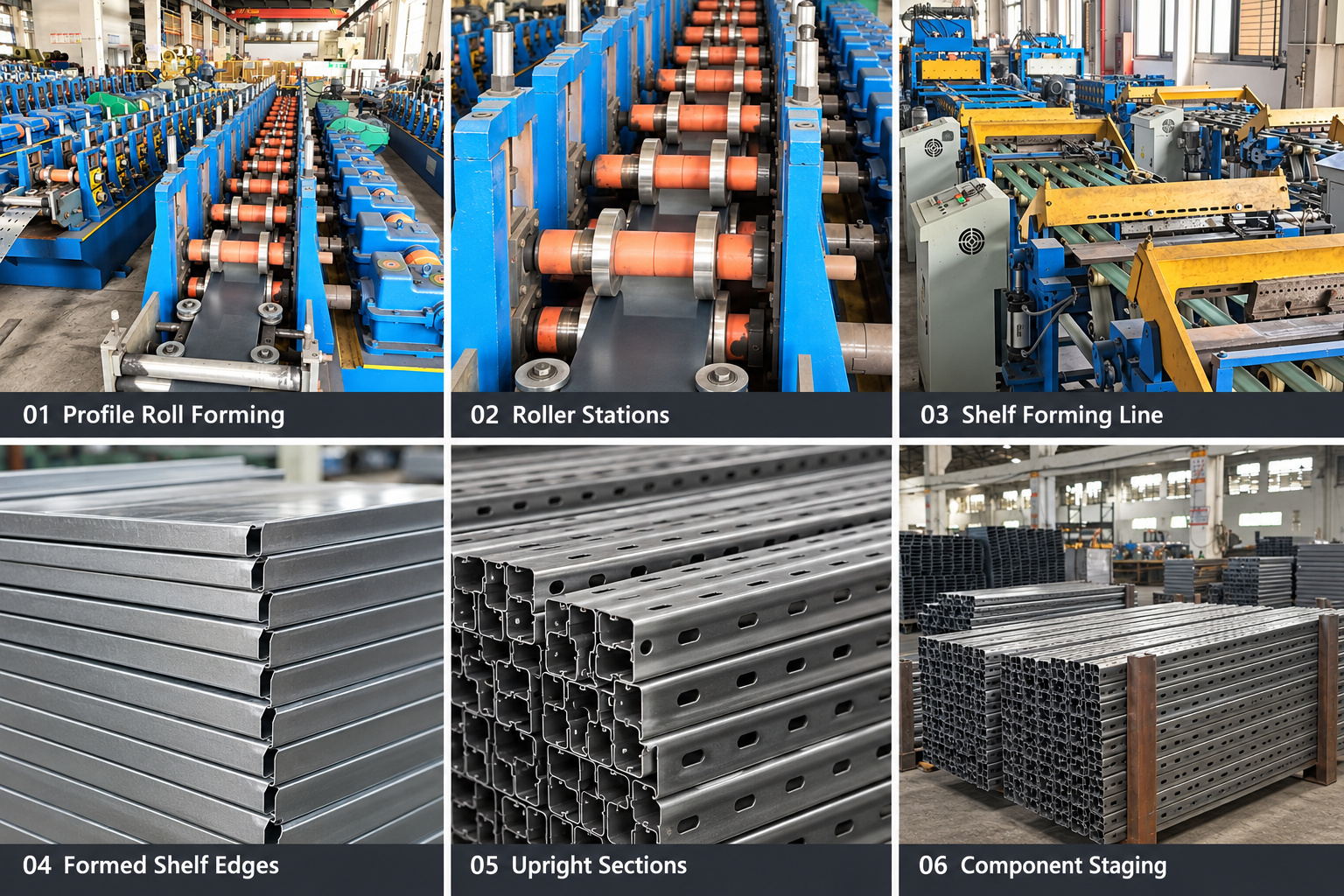
Roll forming progressively shapes steel strip through a series of rollers. It can suit repeated, consistent profiles used in rack production, where the design and order quantity justify the setup.
The processing route depends on section geometry, material, tooling availability and batch size. A custom profile may require additional tooling review. We confirm the proposed route and associated costs before proceeding; not every rack component needs both methods.
 Confirming Material and Section Details
Material thickness, grade and section shape influence how a component forms. Changing the material can alter springback, bend behavior and the fit of adjoining parts, even when the drawing remains unchanged.
Before forming, we review bend locations, flange lengths, section dimensions and the positions of nearby holes or slots. Features close to a bend need particular attention because forming may affect their shape or accessibility.
Buyers can define these requirements through our material and steel specification review. Any proposed material substitution should be approved before production.
Checking Shelf Edges and Connection Features
Formed shelf edges must work with the intended supports and leave sufficient clearance for assembly. Upright profiles need consistent geometry so that brackets, braces and accessories connect as intended.
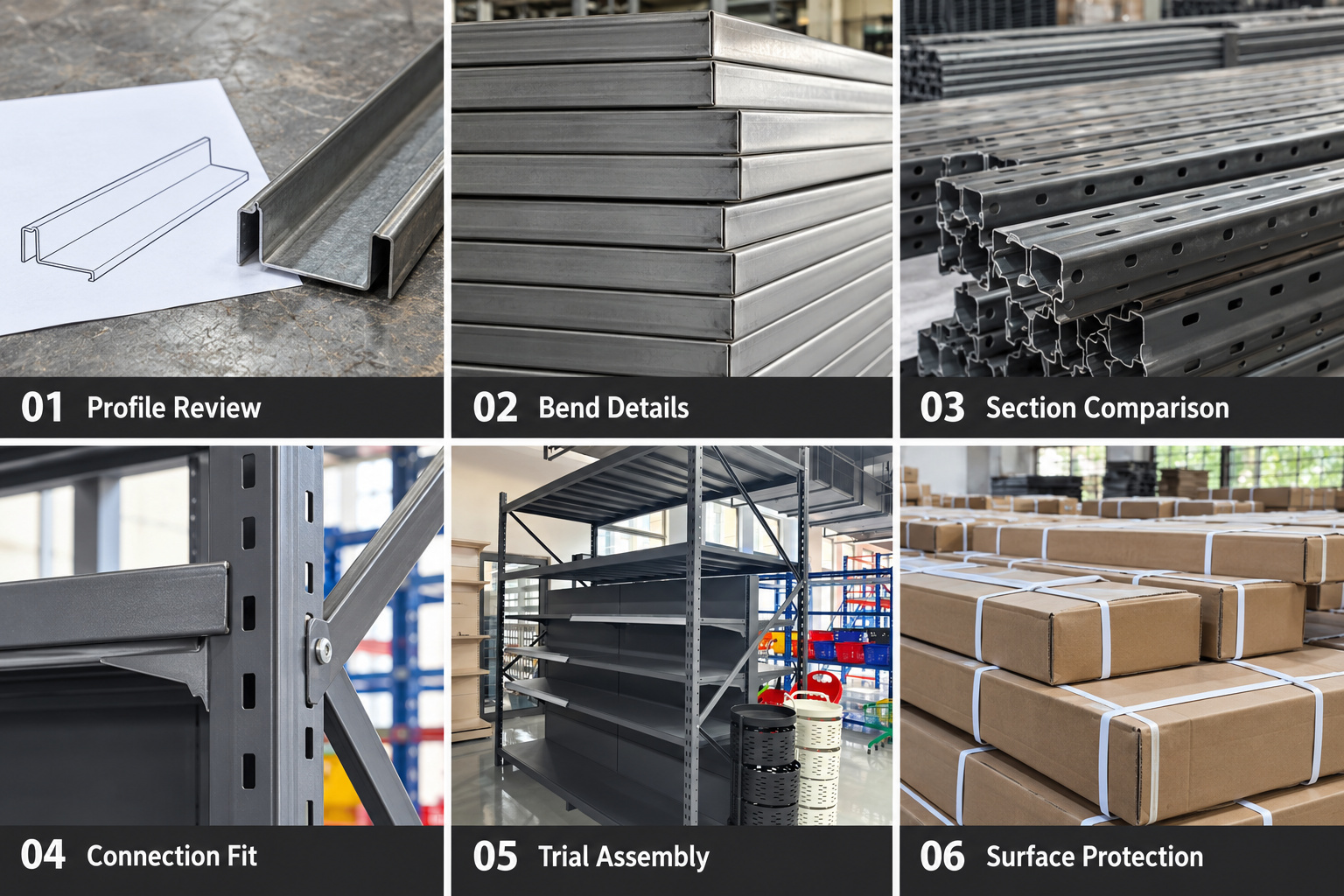
Sample checks focus on bend angles, component dimensions, straightness, visible distortion and mating-part fit. A formed part should be reviewed with its connecting components, rather than judged only by its appearance.
Hole and slot requirements also need coordination with the preceding cutting and punching stage. Forming and connection details must follow the same approved drawing revision.
Approving Samples Before Bulk Production
A formed component sample helps confirm the section shape and assembly arrangement before a larger batch is produced. Where the structure requires it, selected parts are assembled to review shelf seating, bracket engagement and alignment.
Sample approval should record any agreed changes to bends, sections or clearances. Tooling and setup requirements can affect sample cost, MOQ and production timing, particularly for nonstandard profiles.
During bulk production, checks should follow the agreed component specification. Assembly fit and load performance are separate questions; any required load check needs a defined configuration and acceptance criteria.
 Protecting Formed Parts and Planning Delivery
Long profiles and folded sheet components need handling that limits bending, edge damage and surface scratches. Stacking arrangements should suit the component shape and the next production stage.
For separately supplied parts, packing must also account for transport and unloading. Please provide drawings, material requirements, quantities, finish specifications and delivery needs with your inquiry. These details allow us to review forming feasibility, sample scope and the production schedule.