


Select Materials for the Rack Application
Beamvora Racks reviews material specifications for supermarket shelving, stainless steel kitchen racks, clothing displays and shoe racks. We also assess steel requirements for selected pallet, cantilever, FIFO and mezzanine projects.
For importers, distributors and project buyers, material selection affects fabrication, appearance, component fit, packing weight and quotation accuracy. Send the intended application, dimensions, relevant loads and preferred finish with your material request. A reference photograph can help identify the design, but it cannot reliably establish steel grade or thickness.
Match Sheet, Tube and Wire to the Component
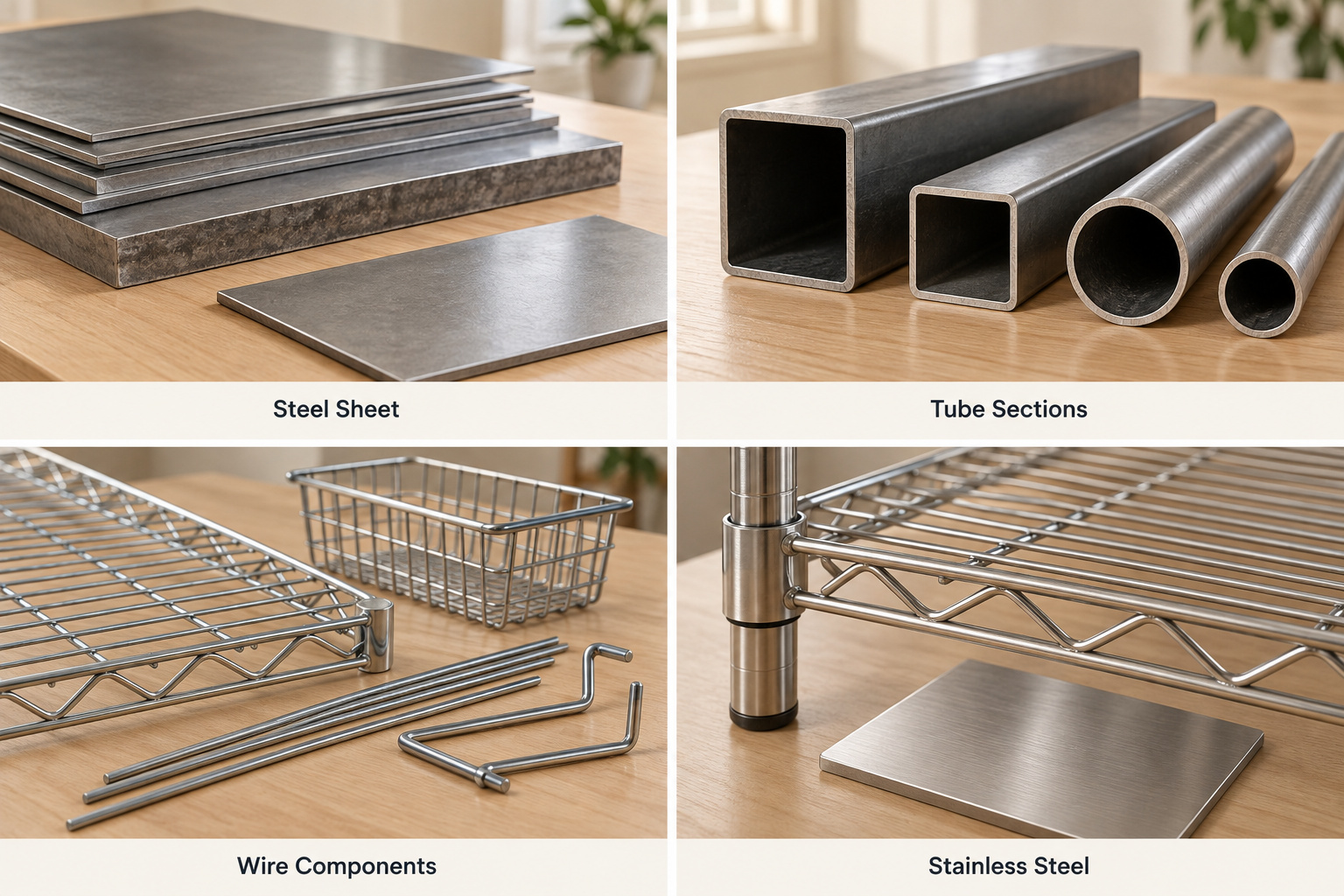
Cold-rolled steel sheet, steel tube and steel wire are available for suitable rack designs. Sheet components may form shelves, panels or brackets, while tube and wire can be used for frames, rails, baskets and other accessories according to the approved structure.
Specify the relevant sheet thickness, tube section and wall thickness, or wire diameter where known. Our size and structure review considers these details alongside spans, connections and component positions. Increasing thickness changes weight and cost; it does not resolve every structural requirement on its own.
 Confirm Steel Grades and Stainless Steel Options
Q235 or Q355 steel can be specified for suitable structural racking projects. The grade should be reviewed with thickness, component geometry, rack configuration and intended loads. A steel grade alone is not a complete load-capacity specification.
Commercial kitchen rack programs can be reviewed in stainless steel 201 or 304. Buyers should identify the operating environment, cleaning conditions and any required material documentation before selection. Selected wood, MDF, acrylic or plastic display components can also be considered for appropriate designs. Their dimensions, attachment points and finish must match the metal structure.
Define Finish and Thickness Requirements Clearly
Clarify whether a stated thickness refers to the base metal or a measurement that includes the finished surface. Where thickness tolerances or critical dimensions matter, include them in the purchasing specification so the quotation and inspection basis are consistent.
Surface requirements should identify powder-coated colors, stainless steel finishes or other applicable treatments. Through color and surface finish confirmation, appearance samples can be reviewed alongside the selected material. Finish samples establish a visual reference; they do not replace material-grade confirmation.
Verify Samples and Production Materials
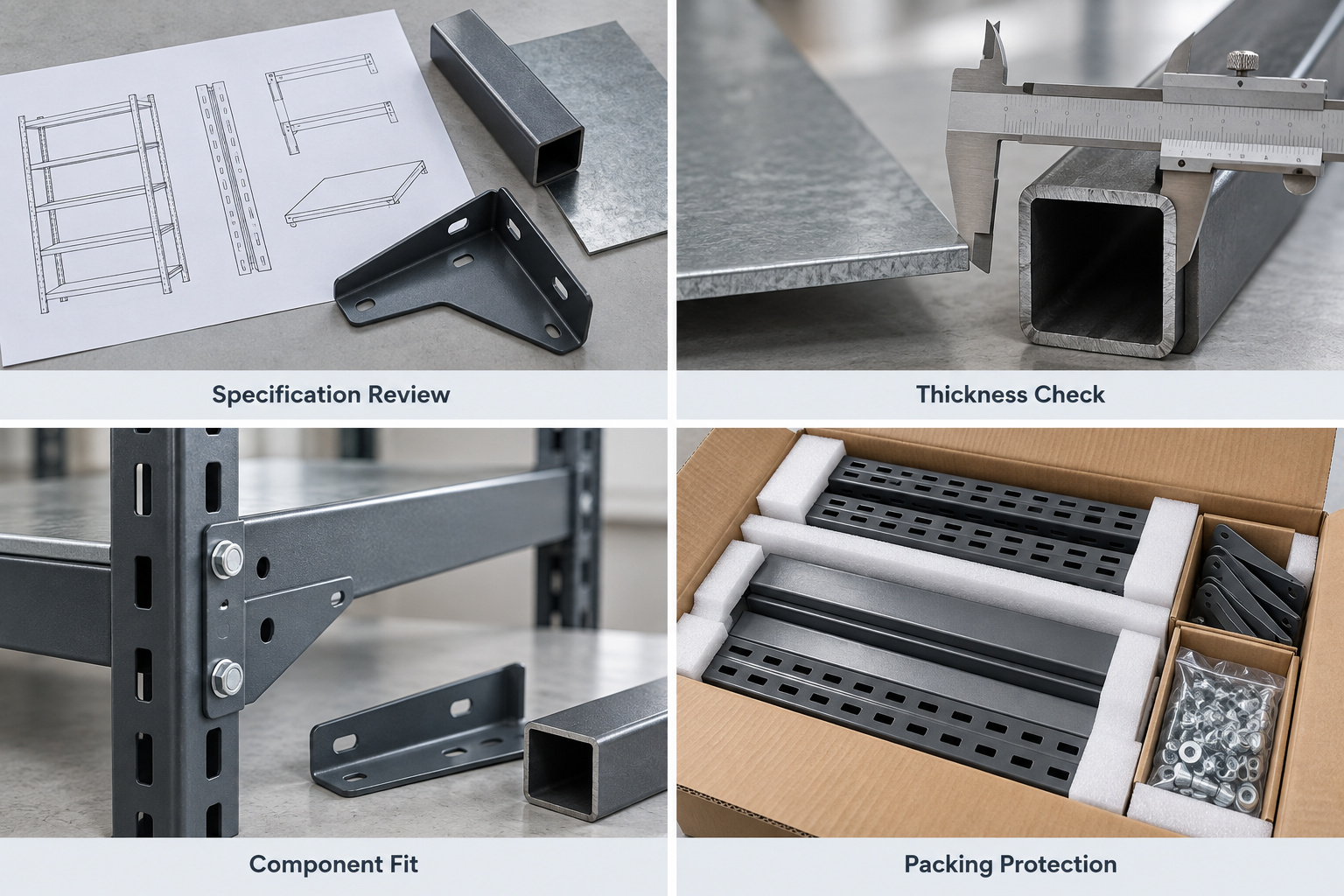
Material requirements are recorded against the approved drawing or order specification. During material preparation, relevant stock and components are checked against the specified material and dimensions before fabrication.
Samples can confirm section sizes, visible surfaces, connections and assembly fit. Customized samples generally require around 12–20 days, with longer schedules possible for complex work. Material verification documents or additional testing requirements should be agreed before ordering. Any proposed substitution needs approval before use.
 Understand Cost, MOQ and Delivery Implications
Material grade, section size, thickness, purchasing quantity and finish affect the quotation. Less commonly stocked specifications may require additional sourcing time or a different minimum quantity.
Customized retail and display programs generally start from about 100–300 sets, depending on material, finish and structure. Production normally requires around 30–45 days, subject to confirmed requirements and scheduling. Industrial projects are quoted separately by configuration, quantity or steel volume. Changes in component weight and shape may also require revised carton, bundle or pallet protection.
Send Your Material Requirements
Provide the rack type, dimensions, quantity, material grade, thickness or section sizes, finish and relevant loads. Include drawings, reference samples, documentation requirements and destination. We will review the specification before confirming material availability, sample requirements and the production schedule.